Prompt Like a Pro: The Simple Framework That Turns Average AI Output Into Professional Results in 2026

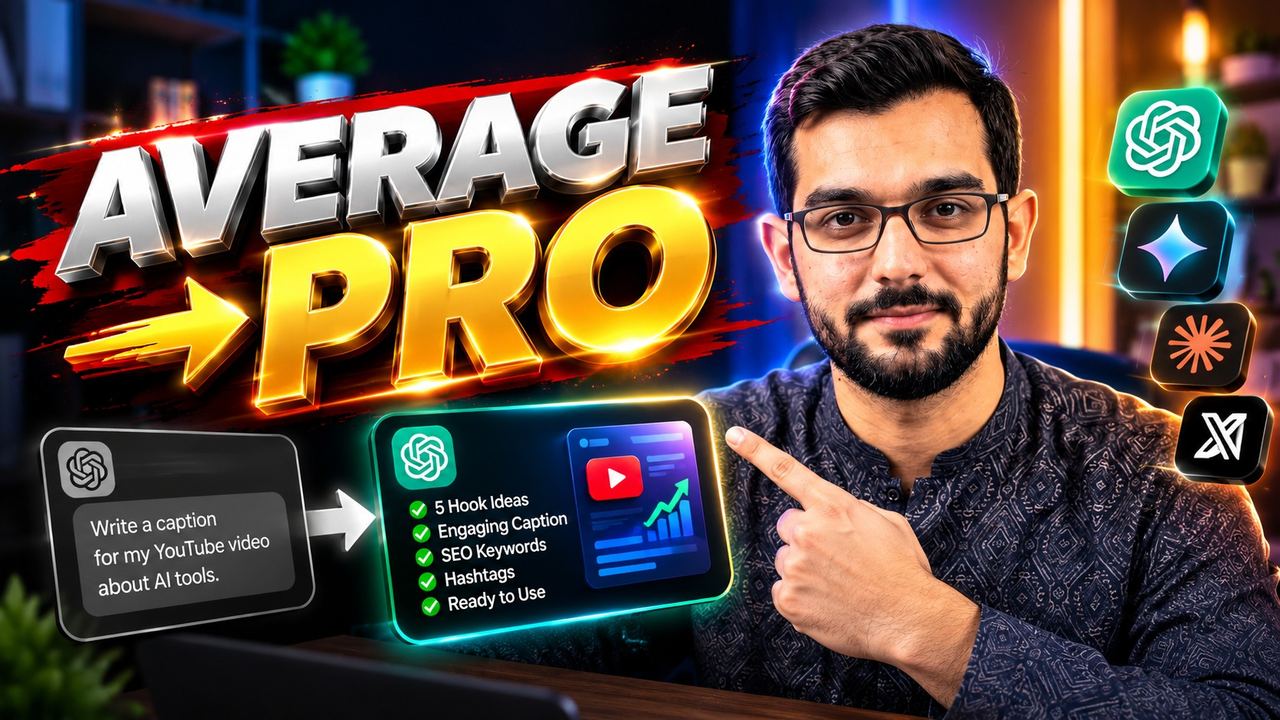
One line changes everything. Most people type a vague sentence into ChatGPT or Claude and accept whatever comes back. Professionals get dramatically better results from the exact same tools, and the difference is not the tool. It is the prompt.
Here is the framework that separates average output from pro output. Three elements. Every time.
Element 1: Give the AI a role
Never start with the task. Start with who the AI should be. "You are a senior copywriter with ten years of experience writing for tech brands" produces fundamentally different output than "write me some copy."
The role sets the vocabulary, the standards, and the perspective. A "YouTube strategist" thinks about retention and click-through. A "brand designer" thinks about consistency and emotion. Pick the role that matches the job, and the AI stops guessing what good looks like.
Element 2: Set the format
AI tools default to generic walls of text because nobody told them otherwise. Tell them exactly what shape the answer should take.
Bad: "Write about AI tools." Good: "Give me five bullet points, each under twenty words, written as hooks for a thirty second reel." The second version is impossible to get wrong, because the format is locked in.
Format instructions to use constantly: length limits, bullet vs paragraph, tone (casual, professional, punchy), and structure (hook first, then three points, then call to action).
Element 3: Define your audience
"Write a caption" means nothing. "Write a caption for beginner freelancers in Pakistan who want their first client" means everything. The audience decides the examples, the language level, and what counts as useful.
This is the element most people skip, and it is the one that matters most for creators. Your audience is not "everyone." Name them: age, skill level, goal, platform. The AI will calibrate everything else around that.
Putting it together: the pro prompt template
Here is the template. Copy it, fill the brackets, use it everywhere:
"You are a [role] with [experience]. Create a [format] about [topic] for [audience]. Tone: [tone]. Length: [limit]."
Example in action: "You are a viral hooks writer with five years of experience. Create ten reel hooks about free AI tools for beginner content creators in South Asia. Tone: punchy and curious. Each hook under twelve words."
Run that against the lazy version, "give me reel hooks," and compare. It is not close.
Why this works on every AI tool
This framework is tool agnostic. ChatGPT, Claude, Gemini, Grok, image generators, video generators: all of them respond to role, format, and audience. Image tools especially reward specificity. "Product photo" gives you stock. "Cinematic product photo, luxury watch, dark background, rim lighting, 85mm lens look" gives you a campaign.
The one mistake to avoid
Do not overstuff the prompt. Three elements, stated clearly, beat a paragraph of rambling instructions. If the output is off, change one element at a time: try a sharper role, a tighter format, or a more specific audience. Iterate like a professional, not like someone shouting at a machine.
Better prompts equal better results. Every time.
Need help with your content?
I provide professional video editing, YouTube, Instagram and TikTok thumbnail design, AI content creation, UGC ads, social media growth support, and YouTube channel and complete brand packages.